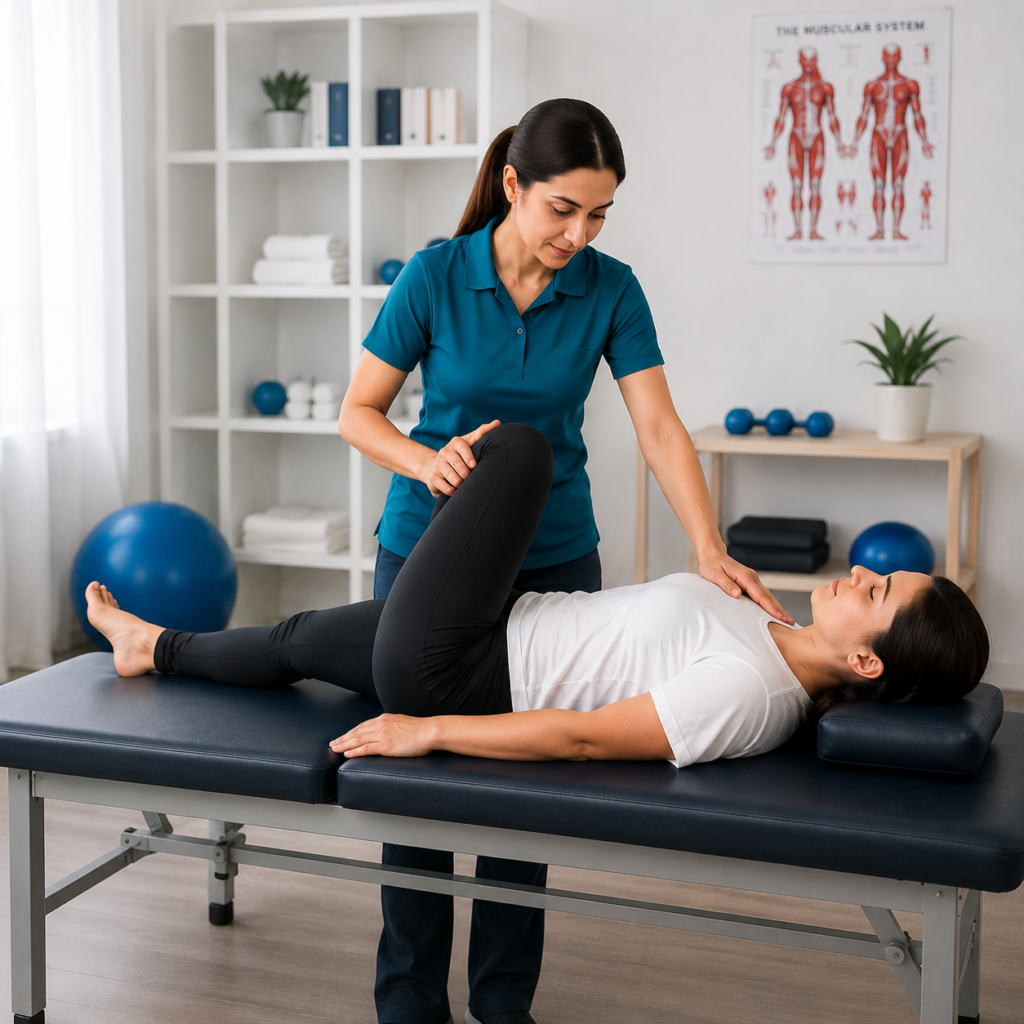
It is natural to want to protect a knee after surgery by keeping it as still as possible. In most cases, though, guided movement — started at the right time and the right amount — is what actually protects the joint and supports a good recovery.
The first six weeks, in general terms
Every surgeon’s protocol is different, and yours should always take priority. In general, early rehabilitation tends to focus on controlling swelling, gently restoring range of motion, and reactivating the muscles around the knee — well before you are back to full activity.
- Swelling management with elevation, ice and gentle movement
- Careful, guided range-of-motion work within the limits your surgeon sets
- Early activation exercises for the thigh and hip muscles
- A gradual, staged return to walking, weight-bearing and daily tasks
Why early guided movement helps
Complete stillness can lead to stiffness, muscle loss and a longer road back to normal function. Movement that is guided and matched to your healing stage keeps the joint supple, keeps supporting muscles engaged, and gives your surgical team useful feedback on how recovery is progressing.
Working alongside your surgeon
We coordinate rehabilitation around your surgeon’s specific protocol and follow-up appointments, so therapy and surgical recovery stay aligned rather than working against each other.
Every patient is different. If you’d like advice matched to your own situation, book an appointment or message us on WhatsApp and we’ll help you find the right starting point.